

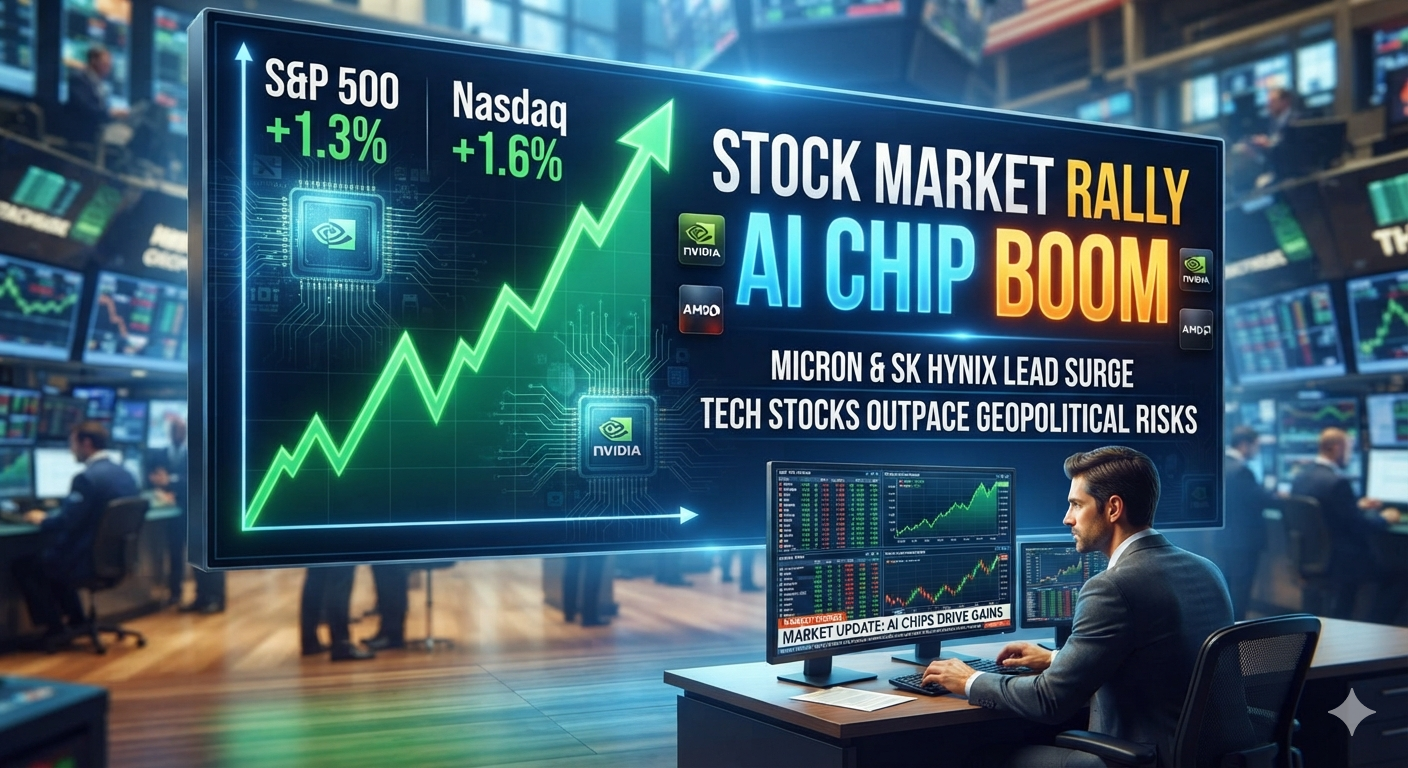
Wall Street Resilient: AI Chip Surge Outpaces Middle East Geopolitical Friction
The U.S. stock market staged a powerful rebound as a massive resurgence in artificial intelligence (AI) and semiconductor demand effectively neutralized building anxieties over renewed geopolitical friction in the Middle East. Driven by blockbuster developments in the semiconductor sector and cooling energy costs, major indexes rallied broadly, reassuring investors that the tech-driven bull market remains fundamentally intact.
Index Performance Overview
US Stock Market News: Nasdaq Jumps 1.3% as Tech Outpaces Geopolitical Risks
The tech-heavy Nasdaq Composite led the charge, surging 1.30% to finish at 26,206.89. Tech sector enthusiasm easily outpaced wider macroeconomic concerns, lifting the broader market along with it. [1]
- S&P 500: Advanced 0.81% to close at 7,543.64, sitting comfortably near mid-summer record territories.
- Dow Jones Industrial Average: Rose 139.02 points, or 0.27%, finishing at 52,487.41 after shaking off an early-session dip.
- Small-Caps: The Russell 2000 also pushed higher by 1.22%, demonstrating a healthy, broad-based participation across market capitalizations.
Semiconductors Reignite the AI Growth Narrative
The primary catalyst for Wall Street’s upward momentum was a spectacular rally across the chip sector, tracked broadly by the VanEck Semiconductor ETF (SMH), which climbed 2.5%.
Optimism exploded after Micron Technology announced a monumental $250 billion U.S. manufacturing expansion targeted specifically at feeding the global memory boom for AI infrastructure. This sent Micron’s stock up 4.5%, while peers like Sandisk popped 7.6%.
Compounding the positive sentiment, South Korea’s SK Hynix successfully priced its highly anticipated Nasdaq debut at $149 per share. The blockbuster American Depositary Receipt (ADR) sale raised a staggering $26.5 billion, backed by intense investor demand that outstripped available shares by seven-to-one. This historic listing provides a massive confidence boost to capital markets and underscores an insatiable global appetite for AI hardware infrastructure. [1, 2, 3]
Energy Subsides as Geopolitical Tensions Pause
Market volatility significantly eased as international crude oil prices retreated from earlier weekly spikes. The correction came after global defense and intelligence channels reported potential avenues for diplomatic de-escalation. Reports indicating that intermediaries like Qatar and Pakistan are working to bridge gaps between Washington and Tehran provided immediate relief to equity traders.
West Texas Intermediate (WTI) and Brent crude futures caved slightly from recent highs, allowing high-exposure consumer discretionary stocks to recapture lost ground.

Macroeconomic Data and Corporate Mixed Bags
On the macroeconomic front, data offered a reassuring picture of the domestic economy. Weekly initial jobless claims arrived virtually unchanged, indicating a highly resilient labor market. However, persistent bond pressures remain, with the 10-year U.S. Treasury yield hovering stubbornly near 4.60%. This reality leaves at least one additional Federal Reserve interest rate hike on the table according to recent prediction market metrics.
Meanwhile, retail and consumer giants showed early signs of shifting consumer habits:
- PepsiCo: Highlighted that while revenue topped forecasts, strained American consumers are tightening retail budgets, prompting the company to implement snack price cuts.
- Costco Wholesale: Shares slid over 4% as investors shrugged off strong June sales numbers to express rising valuation concerns amid uneven regional spending patterns.
Looking Ahead
As Wall Street pivots to the official launch of the corporate earnings season, institutional sentiment leans heavily toward a selective, quality-driven environment. While macro elements like elevated leverage costs and Middle East developments continue to pose headline risks, the underlying structural tailwinds powering AI, chips, and enterprise technology continue to serve as the market’s primary engine of growth.
About The Author









Leave a Reply