

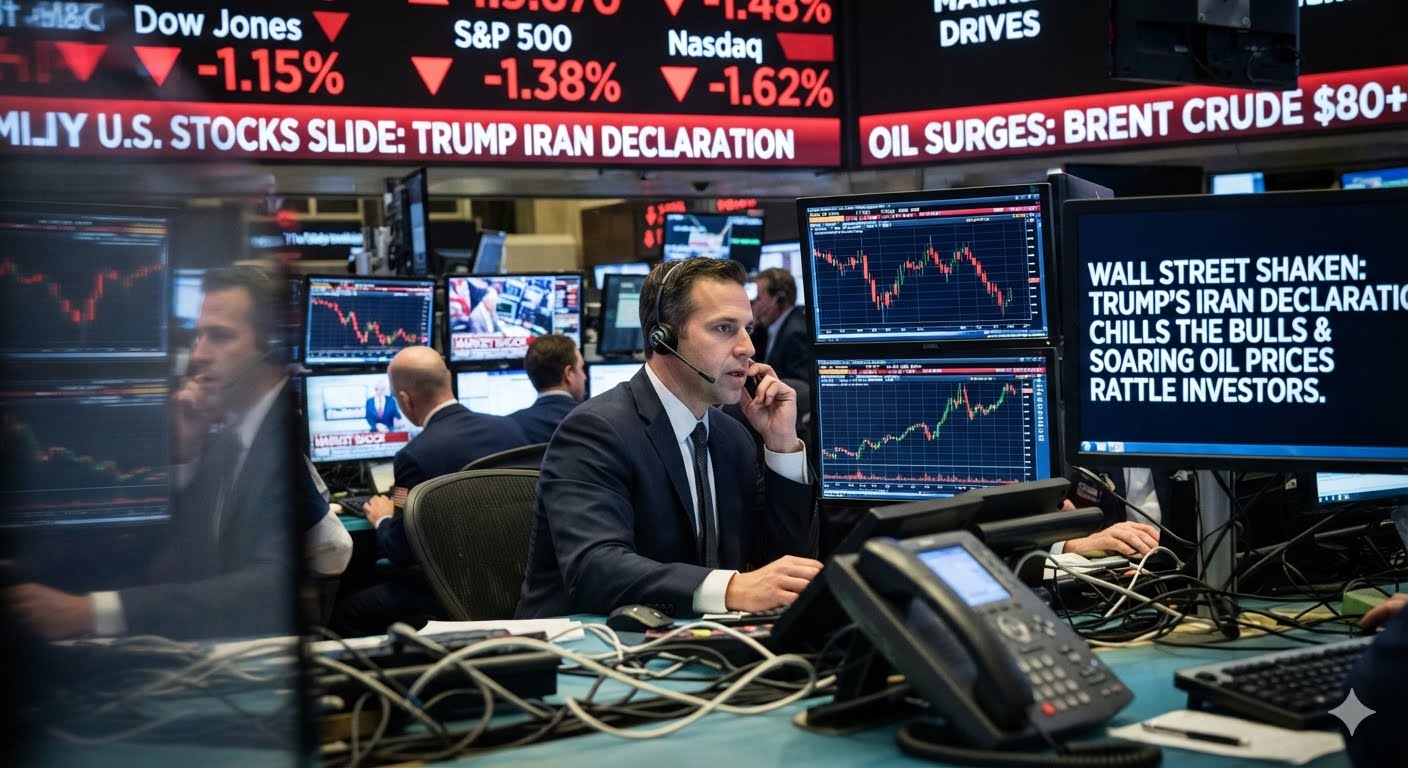
Wall Street Shaken: Trump’s Iran Declaration and Soaring Oil Chill the Bulls
NEW YORK — The U.S. stock market is facing sudden turbulence as geopolitical shocks disrupt the steady momentum of 2026’s second-half bull run. Wall Street indexes retreated sharply after President Donald Trump announced that the interim ceasefire agreement with Iran is officially “over”. Speaking at a NATO summit, Trump warned of imminent additional military strikes, immediately causing investors to reassess risk and forcing equity markets into a defensive stance.
The Dow Jones Industrial Average plunged by more than 500 points (1.09%), while the S&P 500 slid 0.6%. Though the tech-heavy Nasdaq Composite attempted a slight midday recovery driven by isolated chip gains, the overall sentiment remains deeply cautious.
Crude Oil Prices Surge Past $80
The immediate fallout of the collapsed peace talks was felt in the energy markets. Global benchmark Brent crude skyrocketed by over 5%, breaching the critical $80 a barrel threshold. Investors are deeply worried about potential shipping disruptions near the vital Strait of Hormuz, which handles roughly 20% of global oil traffic.
Higher energy prices act as a direct tax on consumers and corporate margins alike. For Wall Street, this sudden oil spike threatens to reignite sticky inflation, complicating the macroeconomic outlook just as markets were stabilizing.
Fed Minutes Reveal Internal Friction
Adding to the market’s anxiety, the latest meeting minutes from the Federal Reserve revealed deep fractures among policymakers. Fed officials are split on the future trajectory of interest rates.
With the U.S. labor market remaining surprisingly resilient and oil prices surging, multiple Fed members have signaled that interest rates may need to remain “higher for longer”. The optimistic forecasts of multiple rate cuts for 2026 are fading rapidly, weighing heavily on growth sectors and capital-intensive companies.
Tech and Defense Stand Out Amid the Chaos
Despite the overarching market sell-off, specific sectors are showing remarkable resilience:
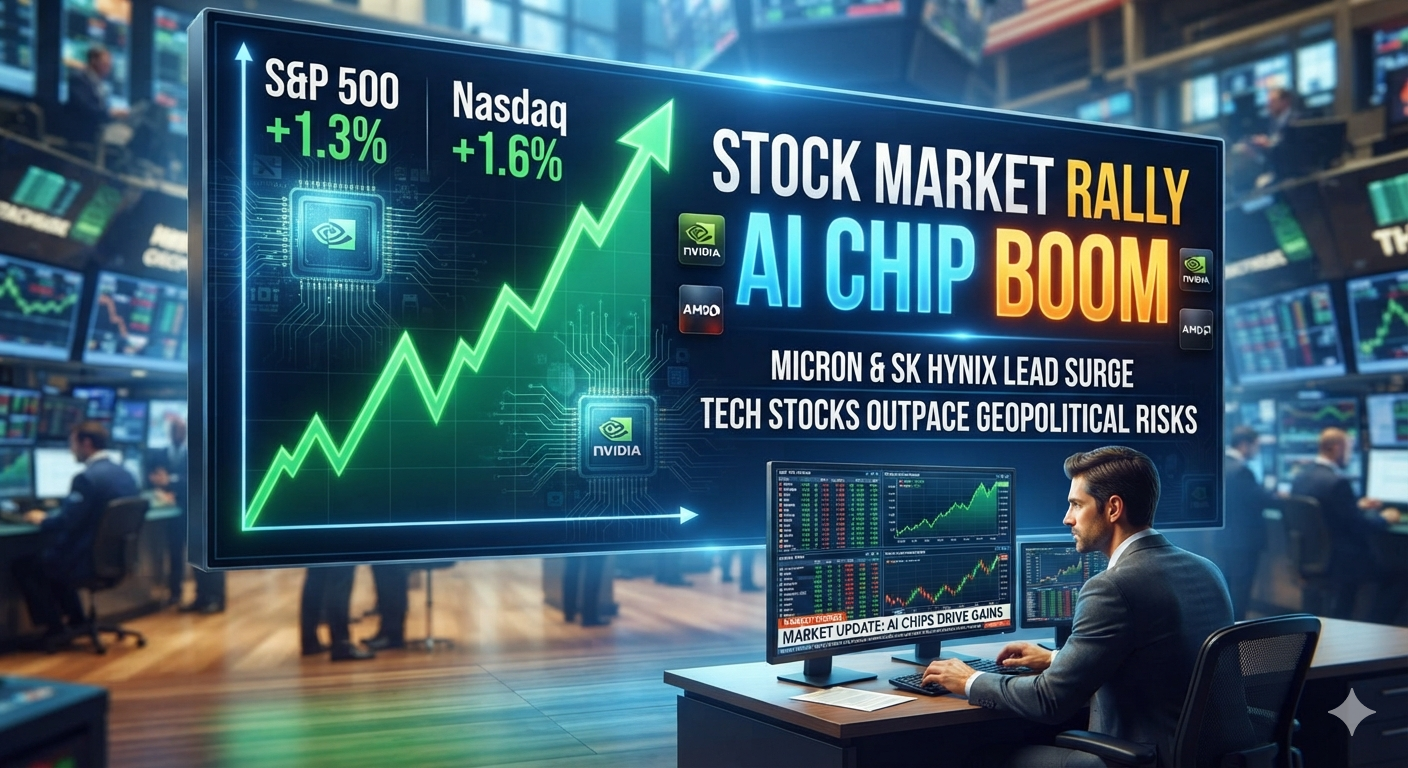
- The AI and Chip Sector: Companies like Broadcom rallied following announcements of major microchip supply deals, offering a localized boost to the Nasdaq. However, other major chipmakers like Micron face heavy pressure due to loftier valuation fears.
- Aerospace and Defense: Traditional electronic-warfare and defense contractors, including Northrop Grumman and RTX Corp, are seeing increased institutional inflow as regional instability mounts.
- The Mega-Cap Cushion: Heavily capitalized tech firms like Apple continue to provide a safety net for investors, supported by massive financial backstops like their historic $100 billion share buyback authorization.
The Outlook for Retail Investors
The current market dynamic is entirely news-driven, meaning that technical charts are taking a back seat to breaking political headlines. Market analysts advise retail investors to avoid aggressive trading or panic-selling during these intraday swings.
The International Monetary Fund (IMF) recently nudged its 2026 global growth forecast down to 3.0%, citing persistent Middle East risks and AI market corrections. In this environment, a diversified portfolio focused on defensive value, energy hedges, and cash-rich balance sheets remains the safest strategy to weather the storm.
About The Author






Leave a Reply